
Upgraded sand filter media are engineered granular materials designed for superior solids removal, longer run times, and predictable hydraulic behavior compared to conventional sands. Key parameters like Effective Size (ES), Uniformity Coefficient (UC), and micron-equivalent performance dictate how a media bed captures suspended solids, manages head loss, and responds to backwashing. These properties are crucial for industrial sand filters and RO pretreatment design. This guide outlines the physical and chemical attributes of upgraded media, highlights international standards, and matches common media types—from quartz sand and anthracite to activated carbon and zeolite—to municipal, industrial, agricultural, and wastewater applications. Engineers and procurement teams will find actionable selection criteria and maintenance best practices. Changsha Dawning, a manufacturer, supplies sand media, deep bed sand filters, and multi-media filters, offering test reports and grading matched to project requirements.
Upgraded sand filter media are granular filtration materials produced to tighter grading, purity, and mechanical standards than ordinary sands. They are specified by Effective Size (ES), Uniformity Coefficient (UC), micron-equivalent capture performance, hardness, and consistent bulk density. Precise specifications reduce variability in headloss and backwash requirements, yielding predictable run lengths.
The table below provides quick numeric reference ranges for upgraded sand filter media attributes.
| Media Type | Effective Size (ES, mm) | Uniformity Coefficient (UC) | Typical Micron Rating (µm) |
|---|---|---|---|
| High-grade Quartz Sand | 0.35 – 0.60 | 1.4 – 1.8 | 20 – 50 |
| Processed Silica Sand | 0.30 – 0.55 | 1.4 – 1.9 | 15 – 50 |
| Fine Garnet | 0.20 – 0.40 | 1.5 – 2.1 | 5 – 30 |
Effective Size (ES) is the particle diameter at which 10% of a media sample by weight is finer (D10). The Uniformity Coefficient (UC) is D60 divided by D10 (D60/D10). Together, ES and UC describe pore-throat distribution and hydraulic permeability; a larger ES generally lowers head loss, while a lower UC indicates a more uniform bed that filters predictably and resists segregation during backwash. Micron rating describes the particle size a media retains under specified conditions. Hardness affects attrition during backwash, influencing replenishment frequency. Density controls material stratification in multi-media beds, creating graded depth filtration. These attributes collectively influence lifecycle cost and performance.
A variety of upgraded granular media meet different removal goals. Designers commonly specify high-purity quartz or processed silica for general turbidity control; garnet for fine polishing; anthracite as a top layer for coarse capture; activated carbon for adsorption of organics; and zeolite for ammonium removal or ion exchange.
| Media | Typical ES (mm) | UC Range | Density (g/cm³) | Primary Application |
|---|---|---|---|---|
| Quartz / Silica | 0.30 – 0.60 | 1.4 – 1.9 | 2.6 – 2.65 | Municipal, cooling towers, pre-RO |
| Garnet | 0.20 – 0.40 | 1.5 – 2.1 | 4.0 – 4.2 | Fine polishing, multi-media bottom layers |
| Anthracite | 0.8 – 1.8 | 1.6 – 2.5 | 1.3 – 1.5 | Top layer for coarse solids, extended run time |
| Activated Carbon | N/A (granular) | Variable | 0.4 – 0.8 | Adsorption of organics and odor control |
| Zeolite | 0.3 – 1.0 | 1.5 – 2.5 | 1.6 – 2.2 | Ammonia removal, ion-exchange polishing |
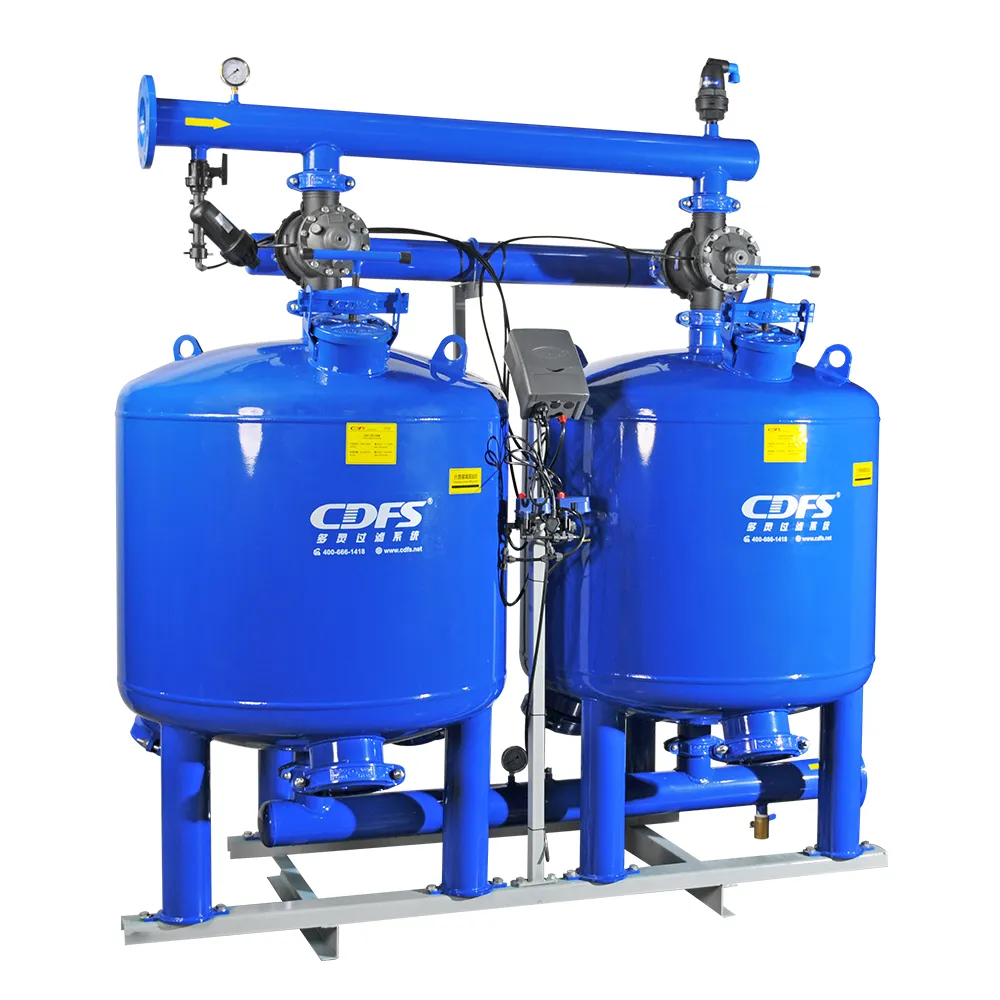
High-purity quartz and processed silica are valued for hardness, chemical stability, and consistent ES/UC, resisting attrition and preserving grain-size distribution. Quartz sand with ES around 0.35–0.60 mm and UC below 1.9 reliably reduces turbidity, making it a solid choice for pre-RO protection. Garnet's high density makes it ideal for bottom layers in multi-media beds, capturing fine particles. Anthracite's low density and angularity improve surface capture and extend run times when used at the top. Activated carbon adds adsorption capacity for dissolved organics, tastes, and odors, while zeolite provides ion-exchange functionality for ammonia or selective cation removal.
Standards like AWWA B100, EN 12904, and IS 8419 set measurable acceptance criteria for grading, contaminants, and test methods, reducing procurement risk. Requesting third-party lab reports and batch traceability confirms delivered media match design assumptions, preventing premature headloss or excessive attrition.
Buyers should request:
These standards require defined particle-size distribution, limits for fines and organic matter, and prescribed test methods for effective size and wash loss. Compliance ensures predictable operational metrics: certified media typically produce longer filter runs, less frequent top-ups, and lower lifecycle costs. Traceable test evidence simplifies technical acceptance and supports clear tender specifications, aligning supplier accountability with the filter’s designed performance envelope.
Multi-media filters combine layers with different particle sizes and densities to extend run times, widen the range of capturable particle sizes, and reduce backwash frequency compared to single-media beds. Key design parameters include bed depth per layer, recommended ES and UC for each layer, filtration velocity, and underdrain configuration. Layer sequencing places lower-density, coarser materials at the top and higher-density, finer materials at the bottom for progressive depth filtration.
| Layer (Top → Bottom) | Particle Size Range (mm) | Approx. Density (g/cm³) | Role in Filtration |
|---|---|---|---|
| Anthracite (Top) | 0.8 – 1.8 | 1.3 – 1.5 | Coarse capture and extended run time |
| Sand (Middle) | 0.35 – 0.60 | 2.6 – 2.65 | Primary turbidity reduction and depth filtration |
| Garnet (Bottom) | 0.20 – 0.40 | 4.0 – 4.2 | Fine polishing and support for fine particle retention |
Multi-media systems typically provide three key operational improvements:
Optimal layering places media in descending particle size and ascending density from top to bottom. Designers choose particle-size ranges and bed depths based on influent solids distribution, target effluent turbidity, and allowable filtration velocity. Compared with single-media beds, multi-media filters commonly increase dirt-holding capacity by 30–80%, leading to longer run lengths and fewer backwashes. They cover a wider particle-size range, improving effluent consistency and downstream protection for applications like RO pretreatment, wastewater polishing, and industrial cooling.
Upgraded sand filter media are essential wherever predictable solids removal, membrane protection, or low-maintenance operation is required. Primary sectors include industrial cooling and boiler systems, municipal drinking-water treatment, agricultural irrigation, wastewater tertiary polishing, and RO pretreatment. Each application has distinct contaminants and operational constraints.
Applications and their typical media preferences:
In industrial cooling and boiler systems, upgraded media reduce particulate fouling and protect heat-transfer surfaces. Municipal plants use narrow-UC quartz to meet turbidity regulations and provide consistent pre-treatment. Agricultural irrigation systems benefit from robust, coarse media or multi-media configurations that resist rapid clogging. For wastewater polishing and RO pretreatment, upgraded media mitigate membrane fouling by removing colloidal and particulate loads, often combining an anthracite top layer with a fine sand or garnet polishing layer to reduce membrane cleaning frequency, improve recovery, and lower chemical use.
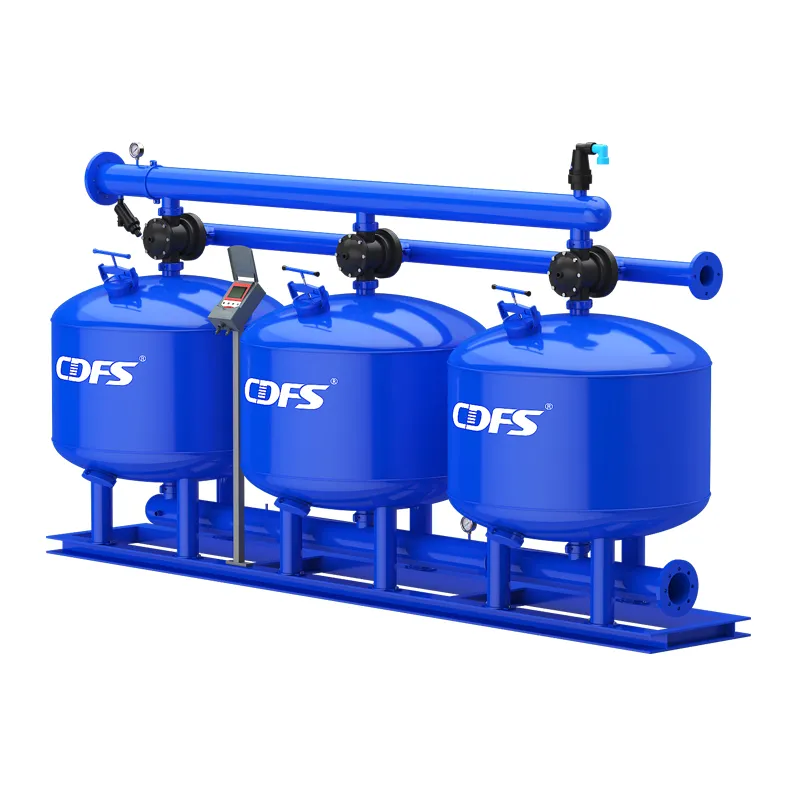
Buyer selection should begin with a decision matrix linking influent water quality, target effluent criteria, flow rate, and operational limits to recommended ES, UC, and material type. Procurement checklists should require particle-size distribution, wash-loss reports, material composition, and abrasion-resistance data. Routine maintenance centers on monitored backwashing, headloss logging, and periodic media inspection.
Selection and monitoring checklist for procurement and operations:
Primary selection drivers include influent suspended-solids size distribution and concentration, target effluent turbidity, chemical environment (pH, oxidants), available backwash water volume, and budget. Match ES to the target particle capture size and select UC values that balance capture efficiency with backwashability. For abrasive or chemically aggressive waters, choose harder, chemically stable materials such as high-grade quartz.
Backwashing should use velocities high enough to fluidize the top layer without washing out lower, higher-density layers (typical ranges fall between 15–30 m/h). Monitor headloss and effluent turbidity as primary indicators: rising headloss or increased turbidity after backwash suggests fouling or channeling, while gradual media loss or shifts in particle-size distribution indicate attrition and the need for top-up or replacement.
Upgraded sand filter media are manufactured to tighter grading, cleanliness and mechanical specifications than conventional sands, resulting in improved particle capture, longer run times and more predictable hydraulic behavior. They are specified where higher performance and reliability are required.
Start with influent characterization (TSS, turbidity, particle-size distribution). Match results to target effluent quality, then choose ES and UC ranges that meet filtration and backwash requirements. Review supplier datasheets and consult technical teams to ensure suitability for flow rate, backwash capability, and downstream equipment protection.
Key tasks include performing backwashes at recommended velocities, tracking headloss, and inspecting media periodically for attrition or fouling. Use turbidity checks to confirm backwash effectiveness and replace or top up media when ES/UC drift or persistent carryover appears. Following supplier guidance ensures reliability.
Consider sourcing and end-of-life handling. Work with suppliers following sustainable extraction practices. Dispose of or recycle spent media per local regulations. Efficient backwashing and targeted chemical use reduce water and chemical waste, lowering the environmental footprint.
Yes. Many manufacturers, including Changsha Dawning Environmental Protection Technology Co., Ltd., offer OEM customization for particle-size distribution, hardness, and chemical resistance. Custom grading and testing ensure the media match unique operational needs across industrial, municipal, and agricultural projects.



 EN
EN
 FR
FR
 NL
NL
 RU
RU
 AR
AR
 VI
VI
 LO
LO
 RO
RO
 TH
TH
 MY
MY
 MS
MS
 PT
PT
 ES
ES
 KO
KO
 BE
BE
 JA
JA
 FIL
FIL
 KA
KA
 DE
DE
 IT
IT

