In today’s water treatment industry, buyers are no longer satisfied with filtration equipment that simply “gets the job done.” Industrial users, irrigation operators, engineering contractors, and water treatment system integrators are looking for solutions that deliver stable performance, easier maintenance, better visibility, and long-term operational value. This is why the idea of a smart monitoring version of sand media filtration is gaining more attention in global markets.
Traditional sand media filters remain one of the most widely used solutions for removing suspended solids and protecting downstream equipment. However, modern applications demand more than basic filtration. Users now want systems that can support more controlled operation, more efficient backwashing, and better system management.
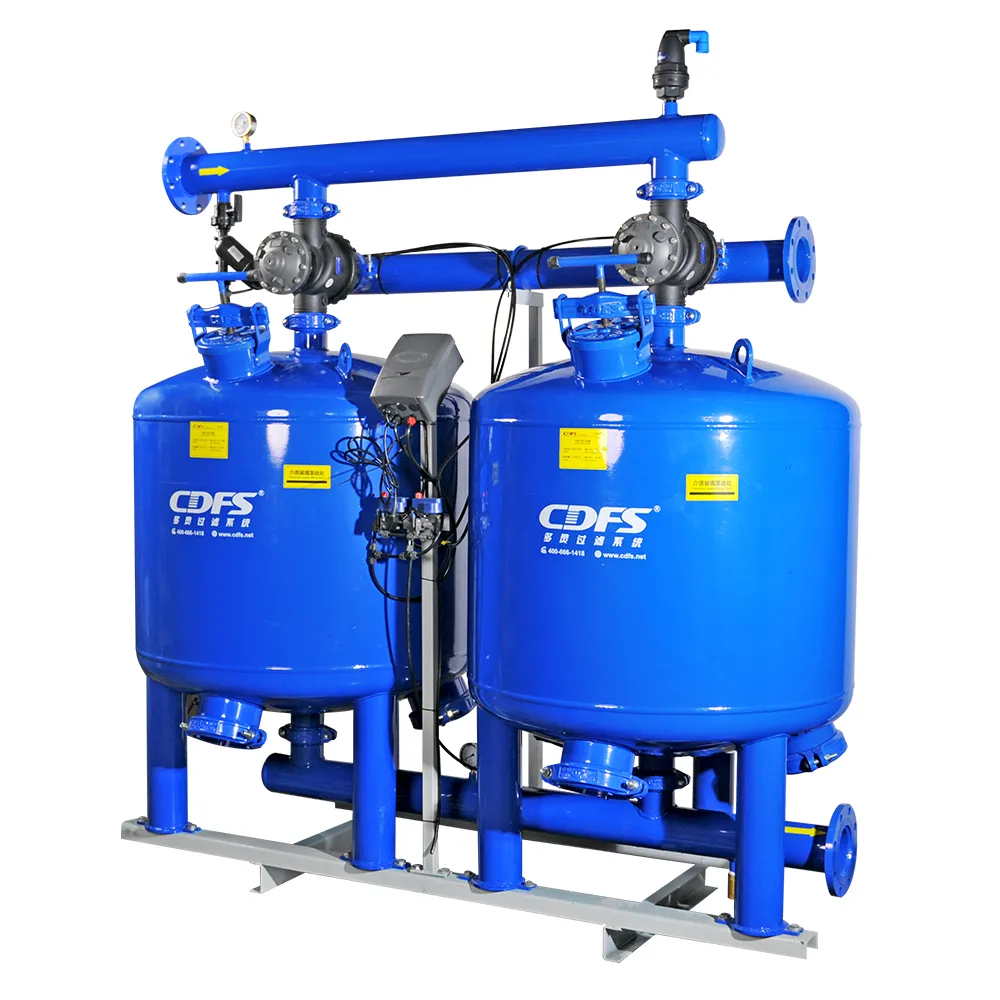
For overseas buyers seeking a reliable and scalable filtration solution, the Two Vessels Sand Media Filter represents a practical foundation for building a more advanced and efficient water treatment process.
Sand media filtration has long been used in a wide range of sectors, including industrial water treatment, agricultural irrigation, cooling water systems, raw water pretreatment, and process water filtration. Its popularity comes from its straightforward design, dependable filtering capability, and broad application range.
But as water treatment standards continue to rise, many end users are discovering the limitations of conventional sand filtration systems. A traditional setup may perform the basic filtration task, yet still leave operators with important unanswered questions:
Without clear operational visibility, a sand media filter can become reactive rather than proactive. In many cases, users only discover performance decline after problems begin affecting the rest of the system.
This is where the concept of a smart monitoring sand media filter becomes highly relevant
Many filtration systems work well at the beginning of installation, but over time, the lack of real-time monitoring may create operational inefficiencies that are not immediately visible.
For users in industrial or agricultural environments, these issues can lead to larger consequences. If a sand media filter does not maintain stable pretreatment performance, downstream equipment may suffer from increased fouling, higher cleaning frequency, shorter service life, and reduced overall plant efficiency.
In irrigation systems, unstable filtration can contribute to emitter clogging, uneven water distribution, and more maintenance work in the field. In industrial plants, poor pretreatment can reduce reliability in cooling systems, process lines, or membrane-based treatment systems.
That is why more buyers are beginning to consider not only filtration capacity, but also how well the filtration system can be monitored, managed, and optimized.
The phrase “smart monitoring version” does not simply mean adding a display panel or attaching a sensor to an existing filter. It represents a more advanced way of managing filtration performance.
A smart monitoring approach to sand media filtration focuses on making system operation more transparent and controllable. It helps operators understand what is happening inside the filter and respond more accurately to changing conditions.
Real-Time Differential Pressure Awareness
Monitoring pressure before and after filtration helps operators identify loading conditions in the media bed. This makes it easier to determine whether the filter is operating normally or approaching a point where cleaning is needed.
Smarter Backwash Decision-Making
Backwashing too often wastes water and energy. Backwashing too late can reduce filtration efficiency and increase system stress. Better monitoring supports better timing.
Improved Maintenance Planning
When performance data is more visible, operators can schedule maintenance more effectively rather than waiting for an obvious problem to occur.
Better System Integration
In more advanced projects, filtration equipment may be connected to broader water treatment controls. This is especially important in automated plants, integrated pretreatment lines, and larger engineering projects.
In short, the smart monitoring version of sand media filtration transforms a filter from a passive mechanical component into a more manageable and performance-aware part of the overall water treatment system.
When designing a filtration system for stable performance and future monitoring upgrades, the structure of the filter itself matters. This is one reason why many projects prefer a two-vessel sand media filter over simpler configurations.
A dual-vessel design can provide important practical benefits in demanding water treatment applications.
Two vessels can support a more balanced filtration process, especially in systems that require continuous or relatively high-flow operation. This helps improve consistency in long-term use.
Dividing the filtration workload across two vessels can reduce pressure on any single filtration unit. This contributes to more stable operation and may help extend system service life.
A two-vessel arrangement can make system performance easier to evaluate and manage, especially when used in larger treatment lines or engineered projects.
If a buyer plans to move toward smarter control and monitoring in the future, a dual-vessel configuration can offer a more suitable structure for that evolution. It supports a more organized approach to performance tracking, maintenance planning, and process optimization.
For many overseas buyers, a dual-vessel system is not just a filtration device. It is a more scalable pretreatment solution with better long-term operational logic.
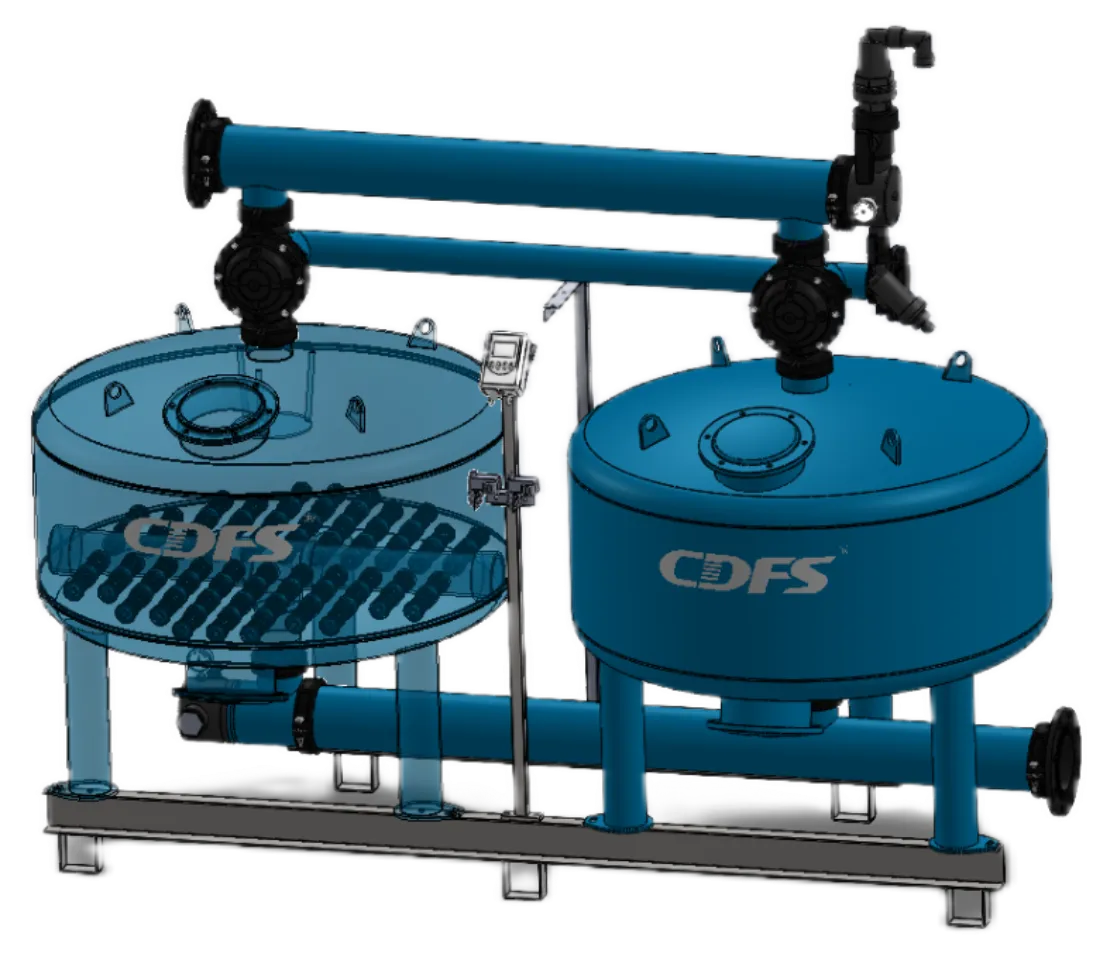
The Two Vessels Sand Media Filter is designed to meet the practical needs of customers who require reliable filtration performance in diverse water treatment applications.
Rather than viewing it as a standalone piece of equipment, buyers can consider it as a key building block in a broader water filtration strategy.
Its two-vessel structure helps support consistent filtration in applications where continuous flow stability and dependable pretreatment are essential.
Sand media filtration often plays a critical role in protecting downstream treatment stages. A stable pretreatment filter can reduce the burden on later equipment, including cartridge filters, membranes, and other fine filtration components.
For customers considering automation, monitoring enhancement, or more integrated control in the future, a reliable dual-vessel filter system offers a practical starting point.
Many projects begin with essential filtration requirements and later expand toward smarter management. Choosing the right filter structure early can make those future improvements easier and more cost-effective.
The future of sand media filtration is not just about removing particles from water. It is about making filtration systems more efficient, more visible, and easier to manage.
A modern filtration investment should ideally help users achieve:
For many buyers, the smartest path is not to jump immediately into a highly complex automated system. Instead, it is often better to start with a well-designed, reliable, and scalable dual-vessel sand media filter that supports future enhancement.
This approach combines practical cost control with better long-term planning. It allows users to build a stronger pretreatment foundation today while keeping the door open for smarter system management tomorrow.
Water treatment requirements have evolved to a new stage, which now requires sand media filtration to develop. The market now demands smart monitoring systems that perform additional functions beyond standard filtration. Buyers want solutions that help them manage performance, reduce inefficiency, and improve the reliability of the entire treatment process.
A dual-vessel sand media filter offers a strong response to that demand. The system provides structural advantages that enable stable operation, and it enables advanced performance monitoring together with system optimization.
The Two Vessels Sand Media Filter serves as an effective solution that industrial companies should consider when they need to enhance their results from industrial filtration, irrigation pretreatment, process water stability, or complete water treatment line performance upgrades.
If you are planning a new filtration project or upgrading an existing water treatment system, contact us with your water source, flow rate, and application details. Our team will assist you in selecting the appropriate sand media filtration system that matches your specific operational requirements.
1. What is a smart monitoring sand media filter?
A smart monitoring sand media filter functions as a filtration system that enables users to observe its operational status through pressure measurements, assists backwash decisions, and supports automated water treatment system integration.
2. Why choose a two-vessel sand media filter instead of a single-vessel design?
A two-vessel sand media filter provides operational advantages through improved load distribution, which results in better performance stability and operational continuity, and enables future monitoring system installation and automation system implementation.
3. What applications is the Two Vessels Sand Media Filter suitable for?
The system operates effectively in industrial water treatment, agricultural irrigation, cooling water systems, raw water pretreatment, process water filtration, and any other projects that need to remove suspended solids.
4. Can a sand media filter help protect downstream membrane systems?
Yes. Sand media filtration operates as a pretreatment process that removes suspended solids to protect downstream equipment, including cartridge filters, ultrafiltration units, and reverse osmosis systems.
5. What information should buyers provide before sending an inquiry?
The water source, flow rate, application type, water quality conditions, installation requirements, and automation or customization needs should be provided by buyers to receive accurate recommendations.



 EN
EN
 FR
FR
 NL
NL
 RU
RU
 AR
AR
 VI
VI
 LO
LO
 RO
RO
 TH
TH
 MY
MY
 MS
MS
 PT
PT
 ES
ES
 KO
KO
 BE
BE
 JA
JA
 FIL
FIL
 KA
KA
 DE
DE
 IT
IT

